آکادمی رابعی اخبار ، مقالات ،آثار و برنامه های مهندس حمید رابعی
نوشته های مشابه


Introduction
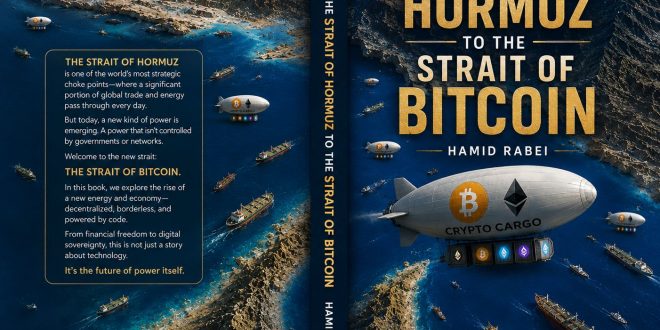
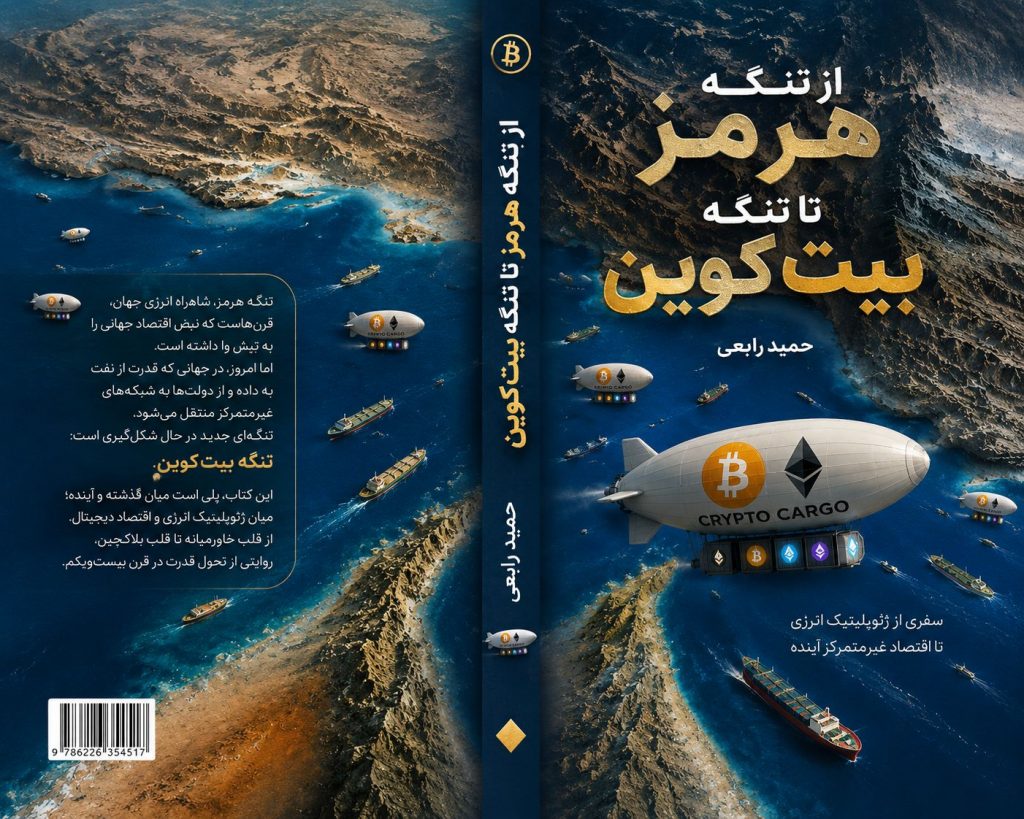
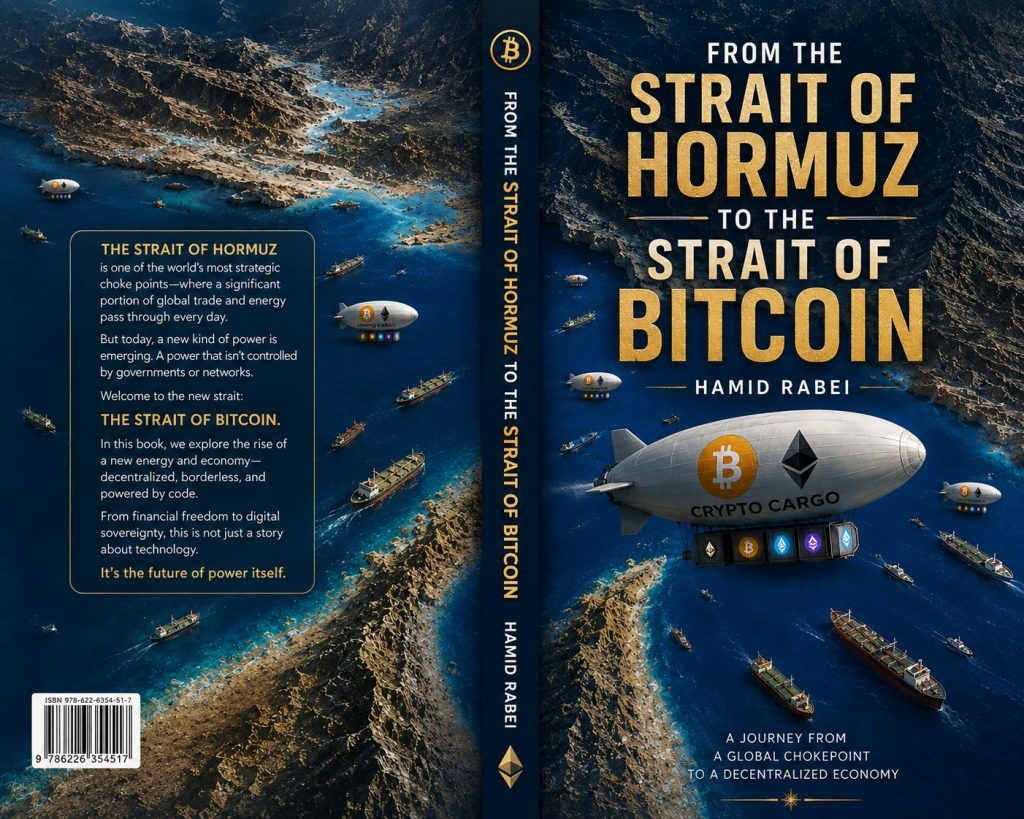
From the Strait of Hormuz to the Bitcoin Strait
Iran, Satoshi Nakamoto, and the Gateways of Power in the Twenty-First Century
Throughout history, power has not always belonged to those who possessed the greatest resources. More often, it has belonged to those who controlled the gateways through which resources flowed.
The Silk Road, the Suez Canal, the Strait of Malacca, and the Strait of Hormuz are not merely geographic routes. They are arteries of wealth, trade, energy, and influence. Whenever the routes of goods, capital, or energy have changed, the map of global power has changed with them.
This book is about the emergence of a new gateway.
A gateway through which oil does not flow, but value, capital, information, and trust do.
A gateway that might be called the “Bitcoin Strait.”
Yet the story of this book does not begin with Bitcoin itself. It begins with a question.
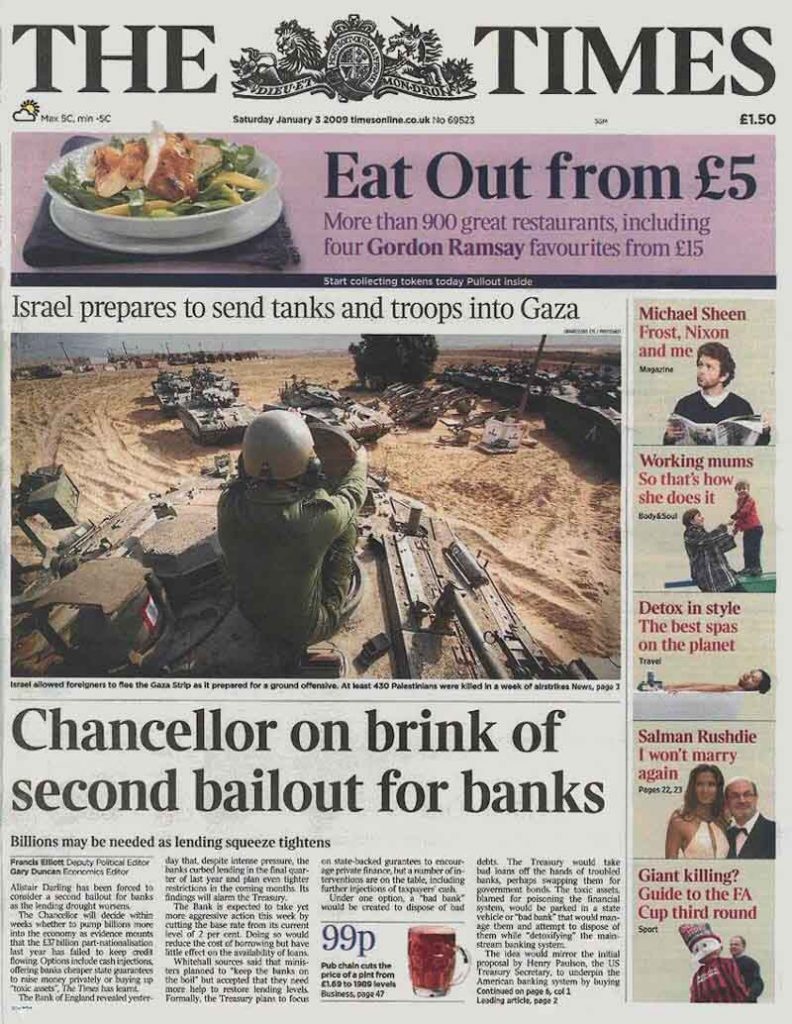
On January 3, 2009, Satoshi Nakamoto created the first block of the Bitcoin network and embedded a message that would later become the most famous sentence in the history of cryptocurrency:
“The Times 03/Jan/2009 Chancellor on brink of second bailout for banks.”
Most interpretations view this statement as a reference to the 2008 financial crisis and a criticism of centralized banking.
But was that really the entirety of Satoshi’s message?
If his sole intention was to reference the banking crisis, why did he also include the name of the newspaper and the exact publication date?
Was he merely quoting a headline, or was he directing readers toward a specific page in history?
To explore this question, we must first return to the philosophy of blockchain.
Blockchain is more than a financial technology; it is a way of thinking. In the logic of blockchain, no piece of data derives its validity in isolation. Each block gains its credibility through its relationship with other blocks, and truth emerges not from examining a single element but from understanding the connections among many elements. In this worldview, meaning is produced by relationships rather than isolated statements. Just as no block can be fully understood apart from the chain to which it belongs, perhaps no significant message can be properly understood apart from its context, its history, and the elements surrounding it.
If we accept this premise, another question emerges:
Should Satoshi Nakamoto’s first message be interpreted according to the same philosophy?
Rather than focusing on a single headline, should we examine the entire page to which Satoshi directed our attention by including both the newspaper’s name and its publication date?
The front page of The Times on January 3, 2009, contained seven principal headlines:
The banking crisis,
The deployment of tanks and troops into Gaza,
Salman Rushdie,
Frost and Nixon,
The FA Cup,
Working mothers,
And lifestyle and wellness.
At first glance, these appear to be nothing more than seven unrelated news stories.
Yet from another perspective, they collectively represent many of the defining dimensions of the modern world:
Economics,
War,
Culture,
Politics,
Society,
Family,
And lifestyle.
It is as though that front page presented a compressed portrait of the contemporary global order.
At this point, the central hypothesis of this book begins to take shape.
The pseudonym of Bitcoin’s creator can be divided into seven phonetic components:
Sa – To – Shi – Na – Ka – Mo – To
And the page that he chose to immortalize also contained seven principal headlines.
This book does not claim that a definitive connection exists between the two.
However, it raises a question:
Just as none of these seven syllables alone constitutes the name “Satoshi Nakamoto,” could it be that none of the seven headlines alone conveys the entirety of the message Satoshi intended to communicate?
Could the real meaning lie in the relationship among all the parts rather than in any single part?
When we examine the content of that page, another intriguing observation emerges.
Several of its major themes overlap with issues that have occupied a central place in the political, economic, cultural, and ideological discourse of the Islamic Republic of Iran for decades:
The global banking system,
Palestine and Gaza,
Salman Rushdie,
And even the date itself.
Perhaps the most intriguing aspect of this puzzle lies not in the headlines but in the date: January 3, 2009.
This date coincides with the anniversary of a historic message sent by Iran’s leader to the leader of the Soviet Union—a message that discussed the limitations of a dominant ideological and economic system and reflected on the future of the world beyond its decline.
Regardless of one’s agreement or disagreement with the content of that message, it remains one of the most widely discussed political texts of the late twentieth century. At its core was a critique of an established order and a search for a horizon beyond it.
This book does not seek to prove that Satoshi Nakamoto selected this date for that reason.
Rather, it asks whether the choice of such a date—combined with headlines concerning banking, Gaza, and Salman Rushdie—can be dismissed as mere coincidence.
Or did Satoshi deliberately draw attention to a page that brought together some of the defining economic, political, and cultural conflicts of the modern era?
Among all the headlines on that page, perhaps none is more striking than the juxtaposition of two concepts:
Bank and Tank.
On one side stood the banking crisis.
On the other stood tanks and military forces entering Gaza.
One symbolized financial power.
The other symbolized military power.
Together, they represented two of the primary instruments through which the contemporary international order exerts influence.
It is as if the front page of The Times placed money and force side by side.
Yet the Bitcoin puzzle extends beyond politics and ideology.
Around the same time that Bitcoin was born, international financial and banking sanctions against Iran were entering a new phase. Banks, payment systems, and global financial infrastructure increasingly became instruments of economic pressure and geopolitical leverage.
At that same moment, a technology emerged that enabled the transfer of value without reliance on central banks, governments, or centralized financial networks.
From this perspective, Bitcoin can be seen not merely as a technical innovation but as a response to one of the fundamental questions of the modern age:
Can value be transferred without passing through the traditional gatekeepers of finance?
And finally, there is energy.
The same element that has made the Strait of Hormuz one of the world’s most strategically significant locations also lies at the heart of Bitcoin.
Bitcoin is, in essence, a system that transforms energy into economic value.
Every unit of Bitcoin is the product of electricity, computational power, and energy consumption.
From this perspective, Iran occupies a uniquely significant position.
It is a country that not only overlooks one of the world’s most important energy gateways but also possesses some of the largest oil and natural gas reserves on Earth.
At the same time that financial sanctions intensified, Iran encountered a phenomenon capable of transforming energy directly into a globally transferable digital asset.
Perhaps that is why this book begins at the Strait of Hormuz and ends at the Bitcoin Strait.
This book is not an attempt to prove a conspiracy theory.
Its purpose is to assemble historical facts, coincidences, geopolitical developments, economic realities, and unresolved questions in order to explore an issue that has received remarkably little attention:
Did Satoshi Nakamoto merely record a headline in the Genesis Block?
Or was he inviting us to read the entire page?
Perhaps every chapter of this book can be understood as an attempt to answer that question.
And perhaps, at the end of that journey, the reader will find themselves searching for an eighth headline—
A headline that never appeared on the front page of The Times, yet may have been hidden within Bitcoin’s very first message.