آکادمی رابعی اخبار ، مقالات ،آثار و برنامه های مهندس حمید رابعی
نوشته های مشابه




Did Satoshi Nakamoto Design a New Strategic Passage of Economic Power?
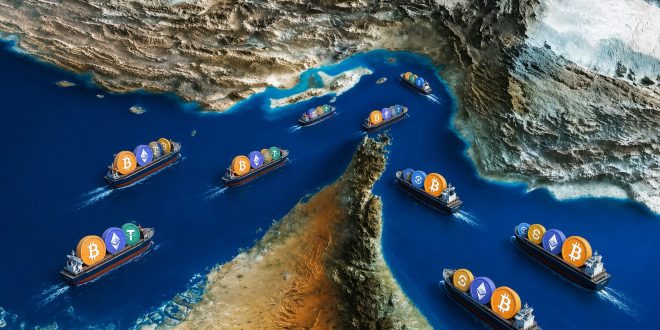
From the Strait of Hormuz to the Bitcoin Strait
Did Satoshi Nakamoto Design a New Strategic Passage of Economic Power?
At a time when global media outlets are once again highlighting the strategic importance of the Strait of Hormuz and the impact that control over this vital energy corridor has on the world economy, it may be worth examining another phenomenon through a similar lens—one through which not oil, but capital, information, and economic power flow.
If the Strait of Hormuz is one of the world’s most important energy transit routes, could Bitcoin and blockchain be viewed as the “Strait of Hormuz of the digital economy”—a corridor that is reshaping the flow of wealth, money, and economic influence across the globe?
This article does not seek to prove such a claim. Rather, it explores a hypothesis that may initially appear unconventional: Is there a connection between the creation of Bitcoin, Satoshi Nakamoto’s first message, certain historical events associated with Iran, and major transformations in the global political economy?
This question is significant because the creator of Bitcoin—an individual or group operating under the pseudonym Satoshi Nakamoto—remains one of the greatest mysteries in the history of technology and economics. More than a decade after Bitcoin’s emergence, Nakamoto’s true identity remains unknown, and the most important clue to his worldview may be the message embedded in Bitcoin’s Genesis Block.
That message reads:
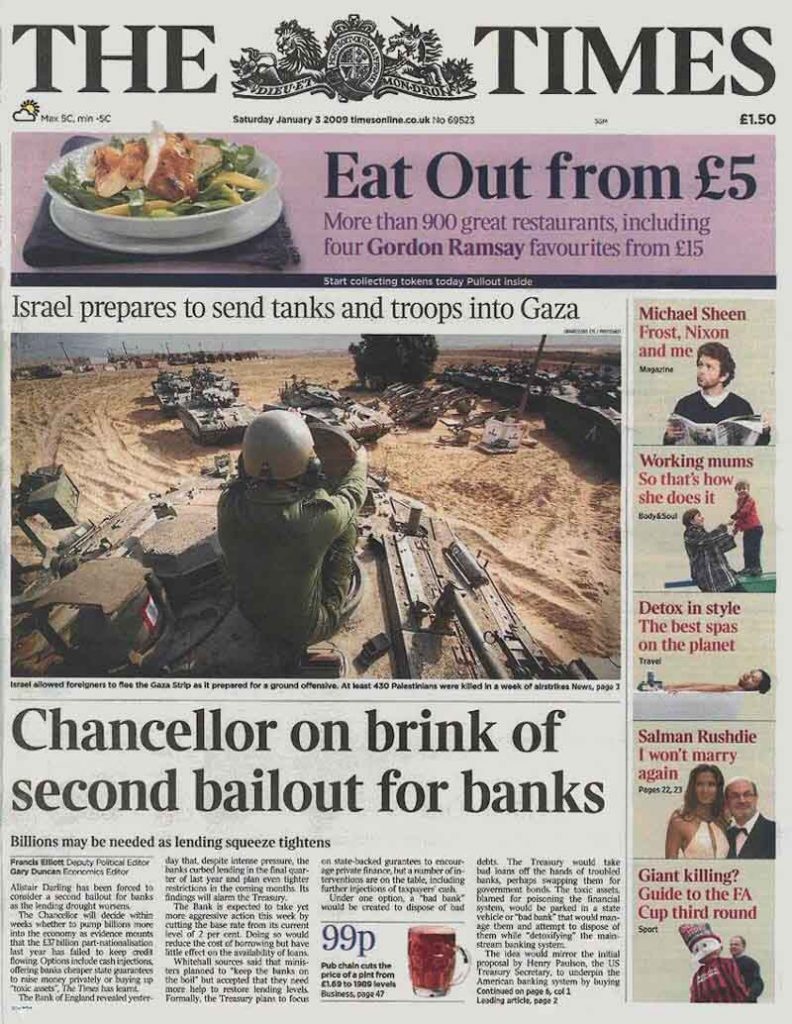
“The Times 03/Jan/2009 Chancellor on brink of second bailout for banks”
Most analyses interpret this statement as a reference to the 2008 financial crisis and a criticism of government-funded bank bailouts. But is it possible that Satoshi Nakamoto’s message contains more than this single sentence?
The Philosophy of Blockchain: Why One Headline May Not Be Enough
To explore this question, we must first return to the fundamental logic of blockchain itself.
Within a blockchain, no block derives its value in isolation. Each block gains meaning and validity through its connection to the blocks before and after it. A block removed from the chain loses not only its credibility but also its place within the system’s underlying philosophy.
Based on this principle, the author argues that just as the value of a block emerges from its relationship with neighboring blocks, Satoshi Nakamoto’s first message should not necessarily be interpreted solely through the headline it explicitly quotes.
If Nakamoto’s only intention was to reference the phrase “second bailout for banks,” there would have been no need to include both the name of the newspaper and the exact publication date. From the author’s perspective, the simultaneous inclusion of The Times and the date effectively creates a cryptographic reference to the newspaper’s entire front page. Otherwise, quoting the banking headline alone would have been sufficient.
Therefore, just as understanding a block requires understanding its position within a chain, understanding Satoshi’s first message may require examining all elements of the reference together.
Where Is the Strait of Hormuz of the Twenty-First Century?
The January 3, 2009 edition of The Times (Issue No. 69,523) contained seven major front-page headlines:
Chancellor on brink of second bailout for banks
Prepares to send tanks and troops into Gaza
Salman Rushdie: I won’t marry again
Giant killing? Guide to the FA Cup third round
Michael Sheen, Frost, Nixon and me
Working mum’s: so that’s how she does it
Detox in style: the best spas on the planet
The author’s interpretation is that if Satoshi Nakamoto intended to draw attention only to a single headline, there would have been little reason to reference the newspaper as a whole. Consequently, the remaining headlines may also form part of the broader context he intended readers to consider.
If this hypothesis is correct, Bitcoin may represent more than a financial instrument. It may constitute part of a larger message about power, economics, politics, and the future direction of global civilization.
Within this framework, blockchain could play a role in the digital economy comparable to the role the Strait of Hormuz plays in the global energy market—a strategic corridor whose control has the potential to reshape international power dynamics.
Banks and Tanks: Two Instruments of Power?
One notable feature of the newspaper’s front page is the juxtaposition of two major headlines.
On one side appeared news of Israel’s preparations to deploy tanks and troops into Gaza. On the other appeared news of the British government’s financial support for banks.
The author argues that the pairing of the words “tank” and “bank” on the same page may be more than a linguistic coincidence.
In this interpretation, tanks symbolize military power while banks symbolize economic and financial power. One operates through force; the other through monetary and financial mechanisms.
From the author’s perspective, both can function as instruments of power—one on the battlefield and the other within the global economic system.
Salman Rushdie, Gaza, and Hidden Signals
Two additional headlines occupy a central place in the author’s analysis: Salman Rushdie and Gaza.
Since the fatwa issued by Ayatollah Khomeini against him, Salman Rushdie has become one of the most recognizable symbols of cultural and ideological conflict in the modern world.
The author proposes the hypothesis that the phonetic similarity between the Persian expression “Salman Rushdie Nakaam” (“Salman Rushdie, unsuccessful/defeated”) and “Satoshi Nakamoto” may represent a form of wordplay or symbolic reference. This remains speculative and would require additional evidence to support.
Meanwhile, the conflict in Gaza occupied a prominent position on the newspaper’s front page. The author suggests that the simultaneous appearance of Gaza, Salman Rushdie, and the Western banking crisis may indicate a symbolic intersection of economics, politics, and ideology.
From the Persian Gulf to Blockchain
Perhaps the most intriguing aspect of this puzzle is the date itself.
January 3, 2009 coincided with the twenty-first anniversary of the delivery of Ayatollah Khomeini’s historic message to Soviet leader Mikhail Gorbachev.
In that message, Khomeini made a statement that would later be remembered as one of the most famous political predictions of the twentieth century:
“Communism must be sought in the museums of history.”
Less than two years later, the Soviet Union collapsed.
The author raises the question of whether Satoshi Nakamoto’s choice of this specific date was merely coincidental—or whether it was intentionally linked to the anniversary of a message predicting the demise of an economic and political system.
Did Iran Influence the “Strait of Hormuz of the Digital Economy”?
Iran occupies a unique geopolitical position due to its influence over one of the world’s most important energy corridors: the Strait of Hormuz.
The author therefore asks whether Iran may also have played a direct or indirect role in shaping some of the ideas, inspirations, or intellectual foundations associated with one of the most significant monetary innovations of the twenty-first century.
This article does not claim to prove such a connection.
However, it argues that the convergence of several elements—the date selected by Satoshi Nakamoto, the anniversary of Khomeini’s message, the presence of Gaza, Salman Rushdie, the banking crisis, and the other headlines on the front page of The Times—creates a hypothesis that deserves further examination rather than outright dismissal.
Did Satoshi Nakamoto Leave an Unwritten Headline?
If all of the front-page headlines of The Times are viewed as blocks within a larger chain, one might conclude that Satoshi Nakamoto was pointing to more than a banking crisis.
Perhaps he intended to communicate about capitalism what had once been said about communism.
Perhaps there was an unwritten headline on that front page—a headline that never appeared in print:
“One day, centralized bank-based capitalism, too, will belong in the museums of history.”
Whether this hypothesis is ultimately correct remains a matter for future research.
Yet if it is ever shown that Satoshi Nakamoto’s choice of January 3, 2009, his reference to The Times, and his Genesis Block message were intended to convey something beyond a simple criticism of bank bailouts, historians of economics may be compelled to revisit a larger question:
At the beginning of the twenty-first century, while Iran occupied a strategic position over one of the world’s most important energy corridors—the Strait of Hormuz—was another idea simultaneously emerging, one that would help establish a new strategic corridor for the digital economy?
A corridor that might today be called the Bitcoin Strait—a passage through which oil does not flow, but through which a significant part of the future of the global economy may one day pass.